voronoid WASM API
voronoid
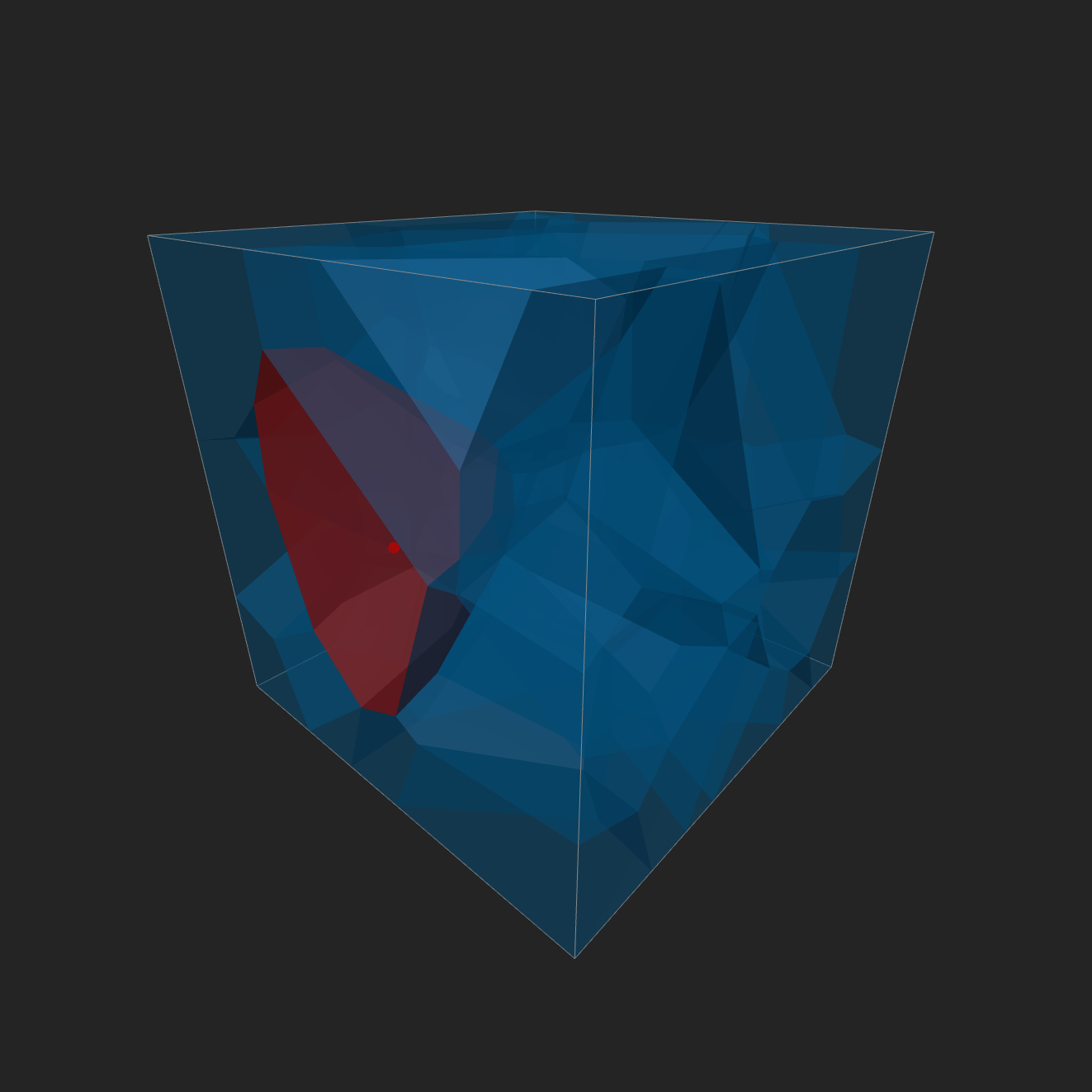
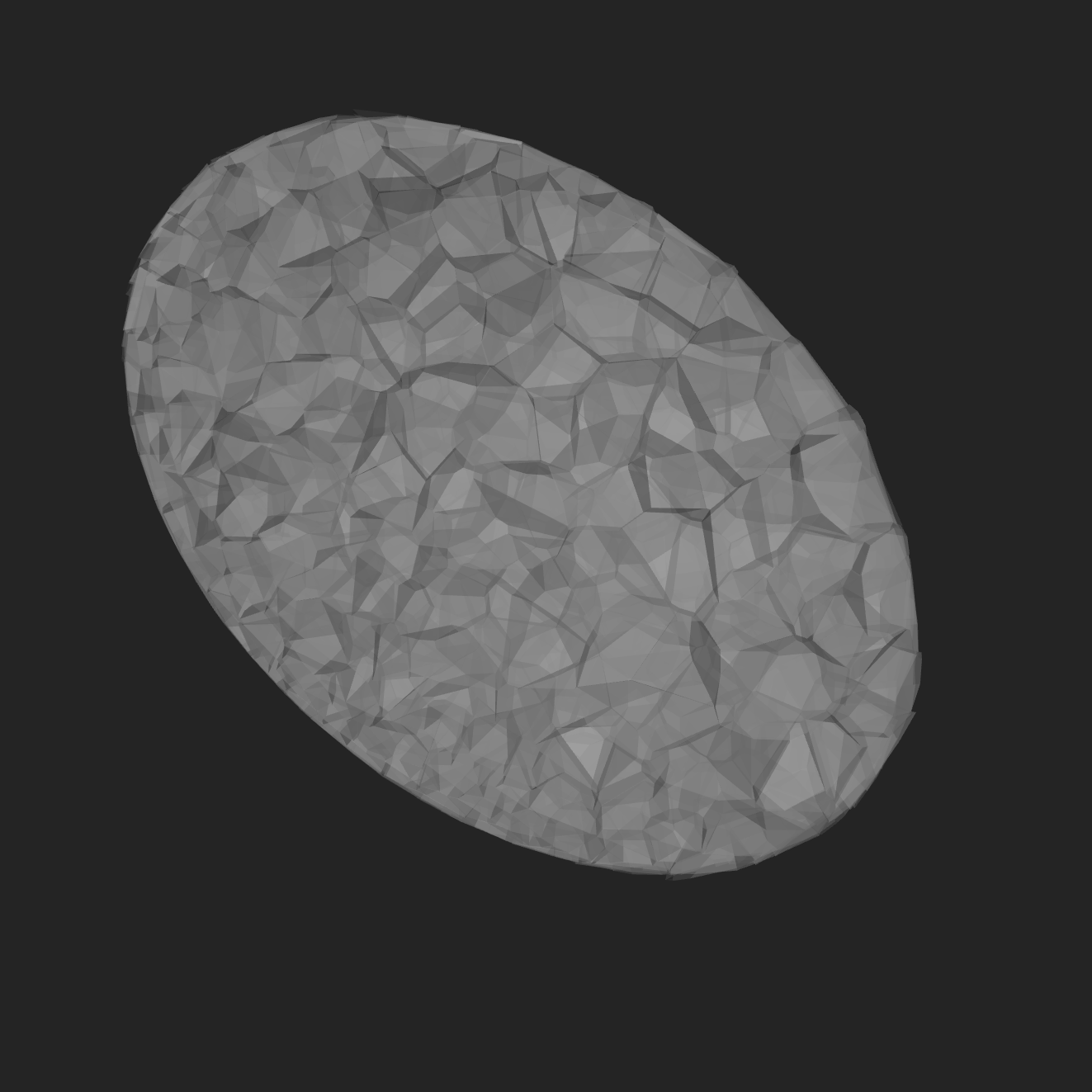
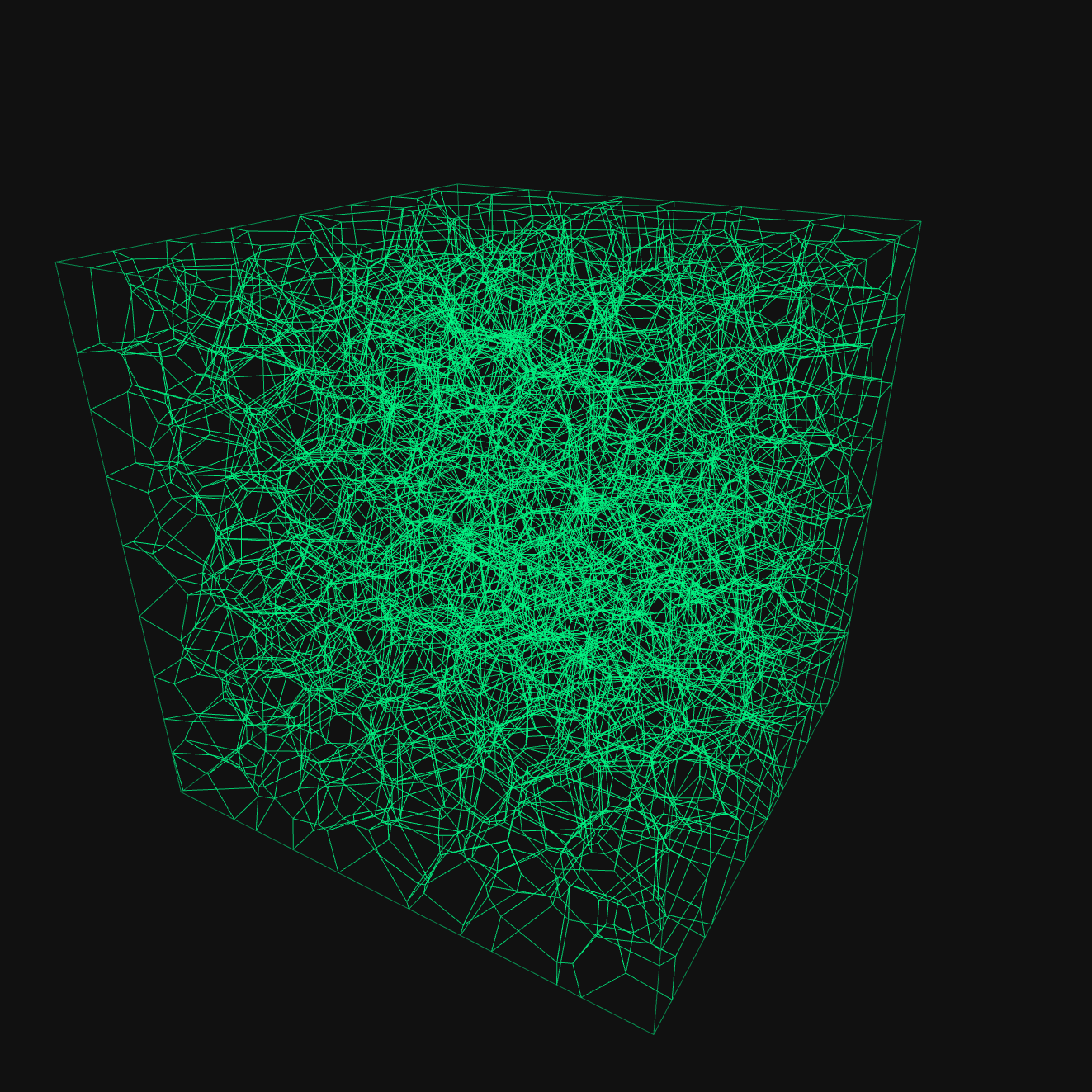
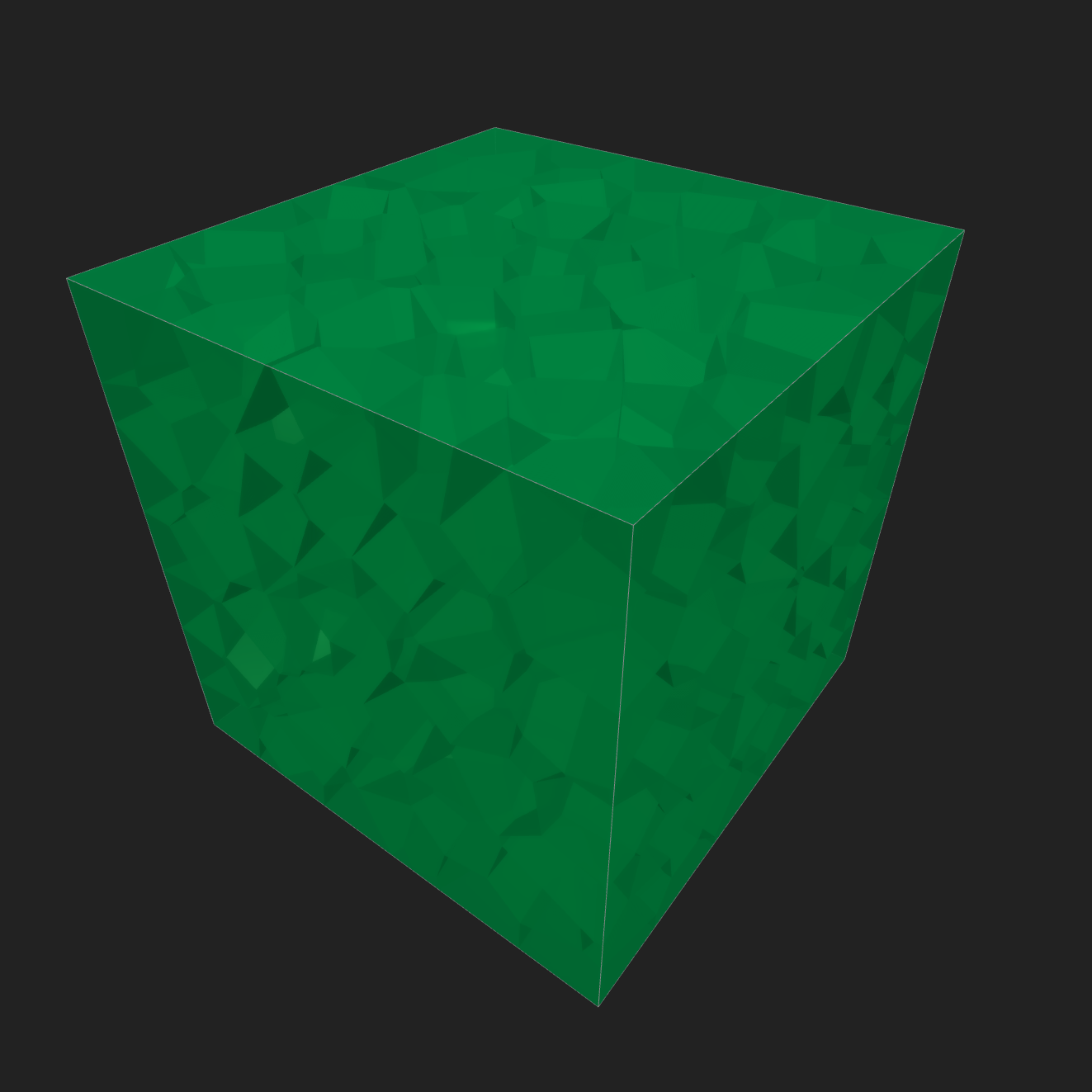
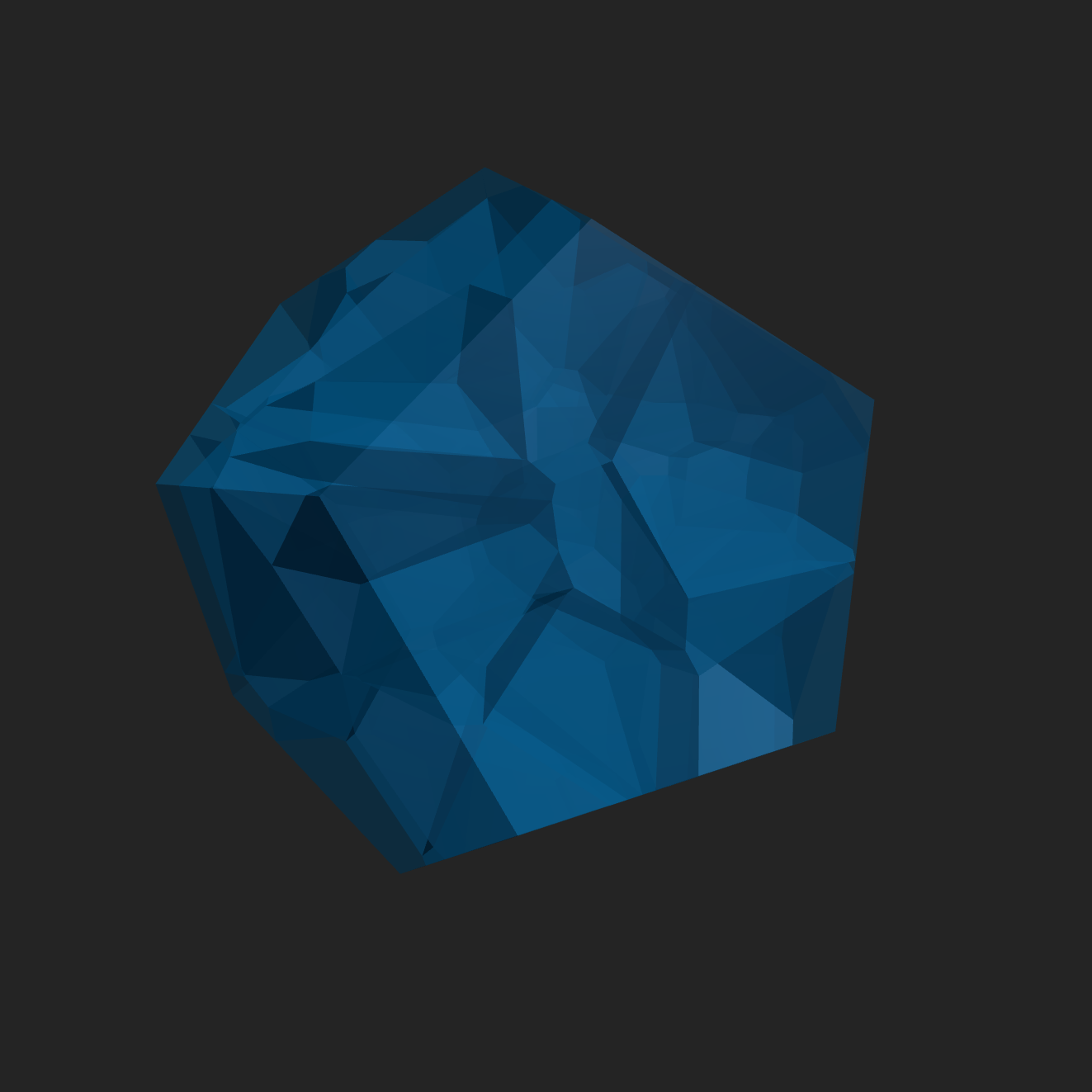
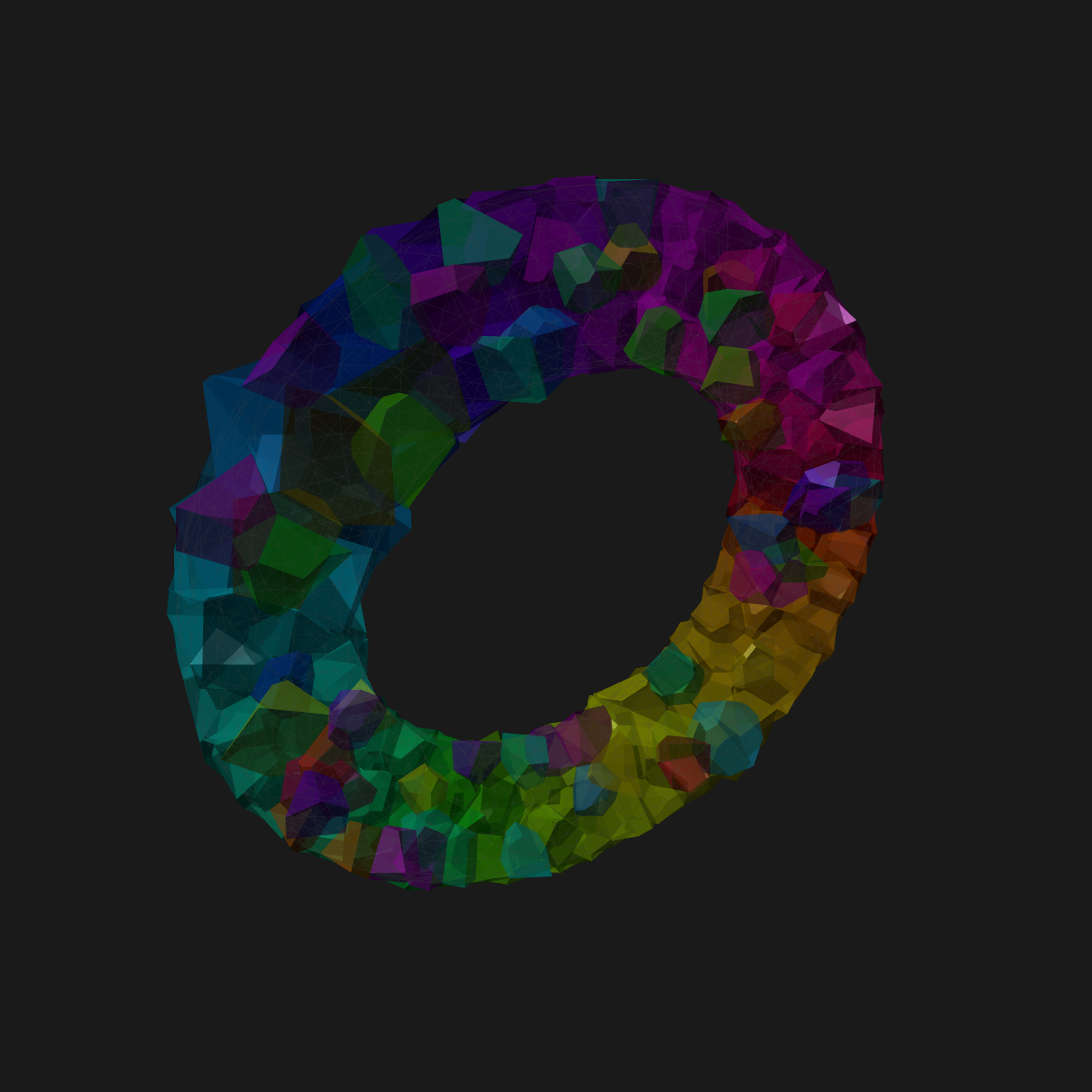
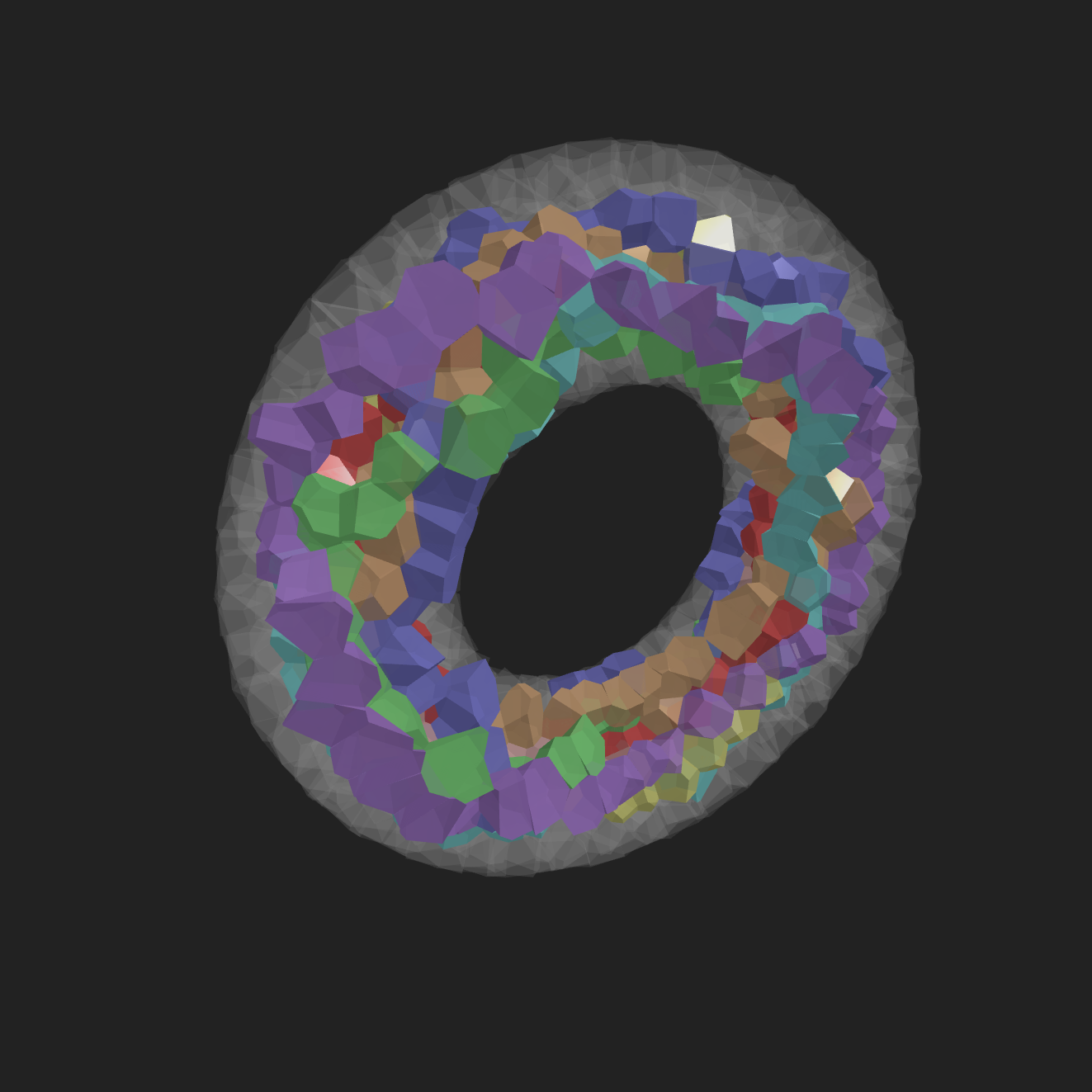
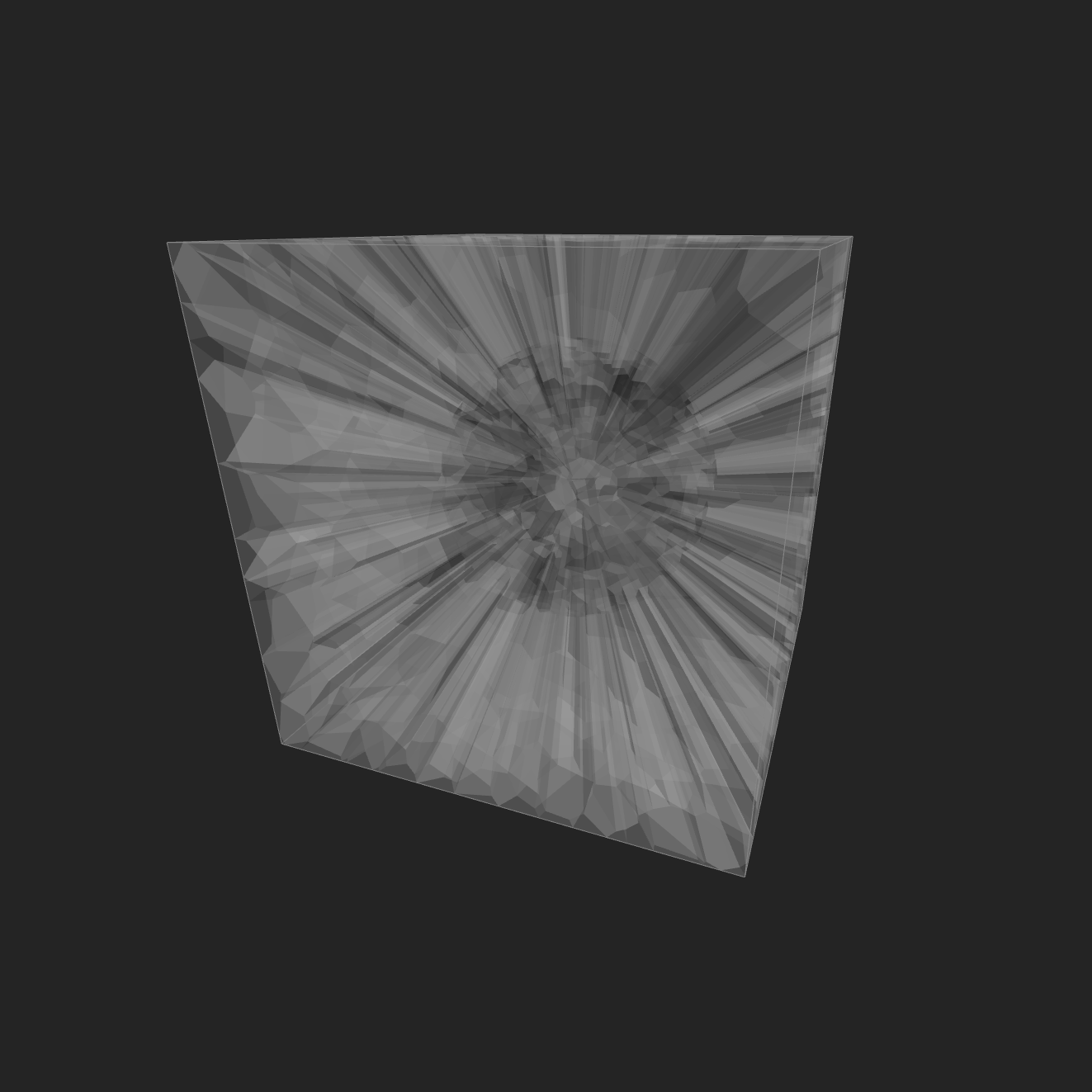
Rust library for 3D Voronoi tessellations, designed to be used in Rust as well as compiled to WebAssembly (TypeScript interface). It provides a flexible and feature-rich implementation to calculate the individual cells by a clipping procedure based on the generating points, the bounding box and possible walls. The tessellation struct takes a spatial algorithm to calculate the nearest neighbours efficiently and a cell struct which manages cell data and the clipping algorithm. The combination of spatial algorithm and cell can then be matched to the specific application and distribution of generators. A few interactive examples with corresponding scripts as reference are shown below.
Installation
The npm package has no external dependencies and is designed for TypeScript and can be installed by:
npm install voronoid
Below some usage examples and the documentation are provided.
Usage
import {init, Tessellation3D, BoundingBox3D, Wall3D, WALL_ID_MAX } from 'voronoid';
async function run() {
await init();
// Create tessellation from bounding box and bins per axis.
const bounds = new BoundingBox3D(0, 0, 0, 100, 100, 100);
const bin_cnt = 10;
const tess = new Tessellation3D(bounds, bin_cnt, bin_cnt, bin_cnt);
// Optional: add a wall to constrain the tessellation.
tess.add_wall(Wall3D.new_sphere(50, 50, 50, 40, WALL_ID_MAX));
// Set the generators randomly, explicit setting via set_generators
// or read_generators is also possible.
const generator_cnt = 1000;
tess.random_generators(generator_cnt);
// Perform the Voronoi tessellation.
tess.calculate();
// Evaluate the results: print average number of faces per cell.
let total_faces = 0;
const cell_count = tess.count_cells;
for (let i = 0; i < cell_count; i++) {
const cell = tess.get_cell(i);
if (cell) {
total_faces += cell.faces().length;
}
}
console.log(`Average faces per cell: ${total_faces / cell_count}`);
}
run();
Documentation
The complete API documentation for the TypeScript interface can be generated locally.
Core Classes
Tessellation2D/3D: The main class for calculating the Voronoi tessellation, managing generators and cells.BoundingBox2D/3D: Defines the boundaries of the space in which the tessellation occurs.Wall2D/3D: Defines optional boundary walls (e.g., spheres, cylinders, planes) that further constrain the cells.
For more detailed information about the underlying mathematical algorithms, you can also consult the Rust documentation.
License
Licensed under either of
- Apache License, Version 2.0 (LICENSE-APACHE or http://www.apache.org/licenses/LICENSE-2.0)
- MIT license (LICENSE-MIT or http://opensource.org/licenses/MIT)
at your option.